Source eco friendly camping water bottle for Hiking, Travel, and Outdoor Adventures
Find 30 verified options for an eco friendly camping water bottle suitable for hiking, travel, and outdoor adventures. Buyers can compare stainless steel and Tritan models with capacities ranging from 500ml to 1600ml, featuring certifications like LFGB and FDA from manufacturers in China.
Key considerations
Products List









Comprehensive Sourcing Guide
Strategic Sourcing Guide for Eco-Friendly Camping Water Bottles
Understanding Material Composition and Environmental Impact
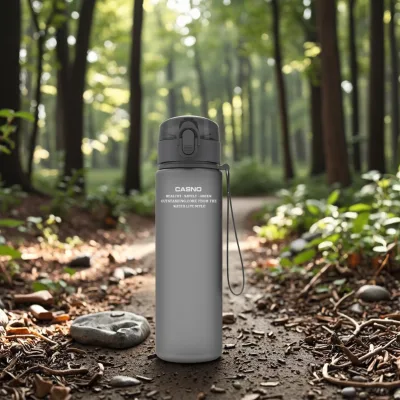
When sourcing eco-friendly camping water bottles, the primary technical differentiator lies in the material composition, which dictates both the environmental footprint and the durability required for outdoor use. The market presents a clear divergence between plastic-based solutions and stainless steel alternatives. For buyers prioritizing sustainability, the presence of "BPA Free" and "Tritan Material" in product attributes signals a commitment to reducing harmful chemical leaching, a critical factor for health-conscious outdoor enthusiasts. These plastic variants often emphasize being "Eco Friendly" and "Food Grade," aligning with modern regulatory expectations for consumer safety.
Conversely, stainless steel options, specifically those utilizing "304SUS" or general "Stainless Steel," offer a different value proposition centered on longevity and recyclability. The "Double Wall" and "Vacuum" features observed in specific product lines indicate advanced insulation capabilities, essential for maintaining beverage temperature in varying camping climates. While plastic bottles may offer lighter weight, the "Leakproof" and "Leak Proof" attributes found across both material categories are non-negotiable for camping scenarios where spills can damage gear or create environmental hazards. Buyers must verify that the "Material Feature" explicitly states "BPA Free" to ensure the product meets the core "eco-friendly" definition regarding chemical safety, rather than relying solely on marketing terminology.
Technical Specifications and Functional Design
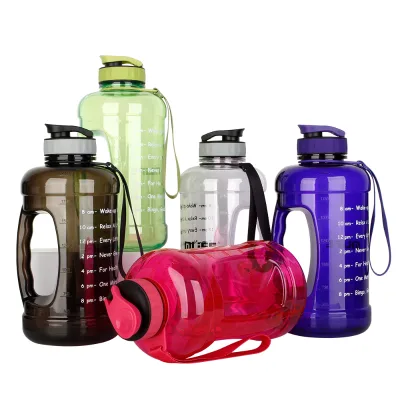
The functional design of a camping water bottle is defined by its physical dimensions, capacity, and structural features. Sourcing data indicates a range of capacities, from compact 500ml units to larger 1600ml vessels, allowing buyers to match inventory to specific user demographics such as "Adults," "Children," or "Teenagers." The physical dimensions vary significantly, with observed sizes including 1019.5cm and 1016cm, alongside specific model identifiers like KL-8080D and KL-8025. These variations suggest a need for a diversified SKU strategy to cater to different camping styles, from day hikes requiring lightweight 500ml bottles to extended expeditions needing 1600ml capacity.
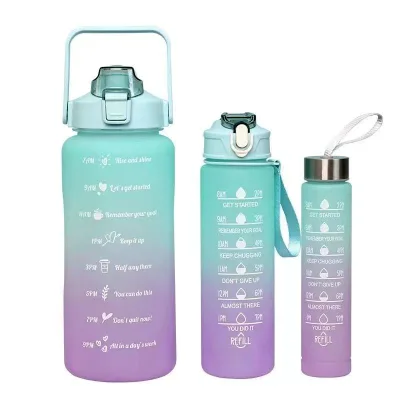
Design elements such as "Round" shapes and "Multicolor" finishes enhance user appeal, while the inclusion of "Cup Accessories" like "with Cover" adds functional utility. The "Sport" style and "Colored" fancy attributes indicate that these products are designed for active use, where aesthetics and ease of handling are paramount. Packaging specifications, such as "OPP Bag" or "Polybag+Color Box," along with gross weights of 19.4kg or 14.7kg per package, are critical for logistics planning. Buyers must calculate the "Package Size" of 56.54348cm to optimize container loading and shipping costs, ensuring that the "Customization" available for logos does not compromise the structural integrity of the packaging.
Compliance, Certification, and Regulatory Standards
Navigating the regulatory landscape is essential for ensuring that eco-friendly claims are substantiated and that products meet international safety standards. The supply chain data highlights several key certifications, including "CIQ," "LFGB," "FDA," and "SGS." The "LFGB" standard, often cited alongside "SGS," is particularly relevant for European markets, while "FDA" compliance is a baseline requirement for the United States. These certifications verify that the materials used, whether "Stainless Steel" or "Tritan," are safe for food and beverage contact.
Furthermore, the "prod_standard" field references specific measurements like 6.722.5CM/6.918CM, which may relate to dimensional tolerances or specific testing protocols. For buyers targeting high-compliance markets, verifying the "Factory Audit" status is crucial. Evidence of "BSCI," "Sedex," and "ISO9001" audits indicates that the manufacturing facility adheres to strict social responsibility and quality management systems. These audits are not merely administrative; they serve as a proxy for the consistency of quality control and the ethical sourcing of raw materials. Buyers should request current audit reports to confirm that the "Eco Friendly" designation is backed by a verified supply chain rather than unverified assertions.
Cost Drivers and Pricing Dynamics
The pricing structure for camping water bottles is influenced by a complex interplay of material costs, customization levels, and order volumes. The observed price range of 0.65 to 10 USD reflects the spectrum from basic plastic models to premium double-walled stainless steel options. The "MOQ" (Minimum Order Quantity) ranges from 1 to 3000 units, offering flexibility for startups and large enterprises alike. However, the unit cost is likely to decrease as the order volume approaches the higher end of the MOQ spectrum, a standard economic principle in manufacturing.
Customization is a significant cost driver. The availability of "Customer Logo" printing, "OEM/ODM" support, and "Design" customization adds layers to the production process. While the base price for a standard unit may be low, the addition of custom branding, specific color requests, or unique packaging requirements will increase the final cost. Buyers must also consider the "Sample Time" of 5-7 days and the "Production Time" of 15-20 days when calculating total landed costs, as expedited timelines often incur premium fees. The "19 years factory" or "16 years factory" experience of suppliers may also correlate with higher efficiency and potentially better pricing, though this should be verified against current market rates rather than assumed.
Supplier Evaluation and Operational Capabilities
Selecting the right supplier requires a deep dive into their operational history and geographic location. The sourcing data identifies origins in "Zhejiang, China" and "Guangdong, China," two major manufacturing hubs known for metalwork and plastic molding respectively. The "Company Years" of 17+ years and specific factory tenures of 16 to 19 years suggest a mature supply base with established processes. This longevity is a strong indicator of stability and the ability to handle large-scale orders without significant disruption.
When evaluating suppliers, buyers should look for those who explicitly support "OEM/ODM" and offer "Customization" for both product design and packaging. The ability to produce models like JT022P, KL-8080D, and KL-7372B demonstrates a versatile production line capable of handling diverse specifications. It is vital to confirm that the supplier's "advantage" claims, such as "Eco Friendly" or "Health Care" features, are backed by the specific certifications mentioned earlier. A supplier with a strong track record in "Food Grade" production is more likely to maintain the integrity of their eco-friendly claims. Buyers should also assess the supplier's capacity to handle the "All-Season" demand, ensuring they can ramp up production during peak camping seasons.
Quality Control and Long-Term Procurement Strategy
Implementing a robust quality control (QC) strategy is essential for maintaining the integrity of eco-friendly products. The "Feature" list includes "Health Care," "Double Wall," "Vacuum," and "Leak Proof," all of which require rigorous testing to ensure they perform as advertised. Buyers should mandate pre-shipment inspections that specifically test for leaks, insulation performance, and the durability of the "Cover" accessories. Given the "15-20 Days" production time, integrating QC checkpoints during the production phase can prevent costly delays and rejections.
For long-term procurement, establishing a relationship with suppliers who offer "Customization" and "Design" support allows for continuous product improvement. The "Applicable People" range of "Adult, Children, Teenagers" suggests that a single supplier can serve multiple market segments, simplifying the supply chain. However, buyers must remain vigilant about the "Material" consistency, ensuring that "Tritan Material" or "304SUS" remains constant across batches. The "Season: All-Season" attribute implies that the product must withstand various environmental conditions, making durability testing a priority. By focusing on suppliers with verified "Factory Audit" credentials and a history of "17+ Years" in the industry, buyers can mitigate risks associated with quality fluctuations and ensure a steady supply of high-performance camping water bottles.
Comparative Analysis of Product Attributes
To facilitate decision-making, the following table summarizes the key attributes observed in the sourcing data, highlighting the distinctions between material types and their associated features.
| Attribute Category | Plastic/Tritan Variant | Stainless Steel Variant |
|---|---|---|
| Primary Material | Tritan Material, BPA Free | 304SUS, Stainless Steel |
| Key Features | Leakproof, Eco Friendly, Food Grade | Double Wall, Vacuum, Leak Proof |
| Certifications | FDA, LFGB, SGS | LFGB, CIQ, BSCI, Sedex, ISO9001 |
| Typical Capacity | 500ml, 610ml, 470ml | 500ml, 1600ml |
| Packaging | Polybag+Color Box, OPP Bag | OPP Bag, Polybag+Color Box |
| Customization | Logo, Design, OEM/ODM | Logo, Design, OEM/ODM |
| Target Audience | Adult, Children, Teenagers | Adult, Children, Teenagers |
| Style | Sport, Colored, Round | Sport, Multicolor, Round |
This comparison underscores that while both material types meet the core requirements for camping utility, the stainless steel options often emphasize advanced thermal properties ("Double Wall," "Vacuum") and broader certification suites ("BSCI," "Sedex"). The plastic options focus heavily on chemical safety ("BPA Free") and lightweight portability. Buyers should align their selection with their specific market positioning, whether that is premium durability or accessible, safe hydration.
Final Procurement Considerations
In conclusion, sourcing eco-friendly camping water bottles requires a balanced approach that weighs material science against regulatory compliance and cost efficiency. The availability of diverse models, from the KL-8080D to the JT022P, provides ample opportunity for buyers to curate a product line that meets the specific needs of outdoor enthusiasts. By prioritizing suppliers with verified certifications like LFGB and FDA, and those with established factory audits, buyers can ensure that their "Eco Friendly" claims are credible and defensible. The long-term success of a procurement strategy in this sector depends on maintaining strict quality control over features like "Leak Proof" performance and "BPA Free" material integrity. As the market continues to evolve, staying informed about the latest standards and maintaining a flexible relationship with suppliers capable of "OEM/ODM" support will be key to navigating the competitive landscape of outdoor gear.
FAQs
What certifications do eco friendly camping water bottles have?
These bottles typically hold LFGB, FDA, and SGS certifications to ensure food safety. Some stainless steel models also carry CIQ marks, while factory audits may include BSCI and ISO9001 standards for quality assurance.
Which materials are used for eco friendly camping water bottles?
Manufacturers primarily use 304SUS stainless steel or BPA Free Tritan plastic for durability. Both materials are designed to be leakproof and safe for children and adults, with some options featuring double wall vacuum insulation.
Can I customize the logo on these water bottles?
Yes, customization is available for customer logos and design preferences on most models. Suppliers support OEM and ODM services, allowing buyers to request specific colors, shapes, and packaging options like OPP bags or color boxes.
What is the minimum order quantity for these bottles?
The minimum order quantity ranges from 1 to 3000 units depending on the supplier and model. This flexibility allows small startups to test products while accommodating large enterprise orders for bulk distribution.
How long does production take for custom orders?
Production time typically takes 15 to 20 days after sample approval. Samples are usually ready within 5 to 7 days, allowing buyers to verify quality before committing to larger manufacturing batches.
What capacities are available for camping water bottles?
Available capacities range from compact 500ml units to large 1600ml vessels. Specific models offer 610ml or 470ml options, catering to different needs for adults, teenagers, and children during outdoor activities.
Where are these water bottles manufactured?
Products originate from manufacturing hubs in Zhejiang and Guangdong, China. These locations host factories with over 16 years of experience, ensuring established processes for producing food-grade and eco-friendly hydration gear.